Typed garden essay, page 2 of 4 — sowing seed, preparing beds, manure and tobacco dust
Book 2, Page 159 ·1930–1950
Transcription
Page numbered 2. at the upper right:
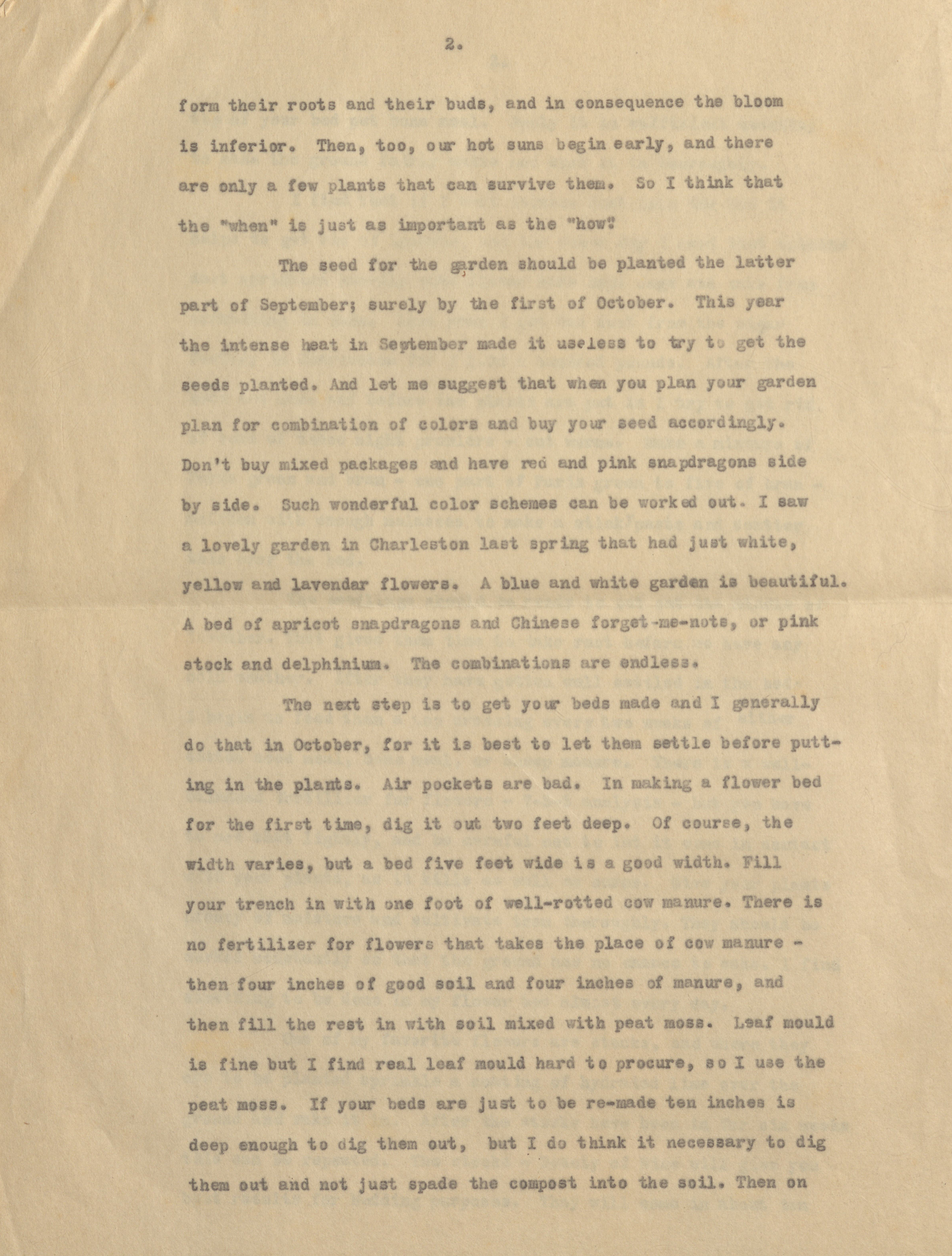
form their roots and their buds, and in consequence the bloom is inferior. Then, too, our hot suns begin early, and there are only a few plants that can survive them. So I think that the “when” is just as important as the “how”.
The seed for the garden should be planted the latter part of September; surely by the first of October. This year the intense heat in September made it useless to try to get the seeds planted. And let me suggest that when you plan your garden plan for combination of colors and buy your seed accordingly. Don’t buy mixed packages and have red and pink snapdragons side by side. Such wonderful color schemes can be worked out. I saw a lovely garden in Charleston last spring that had just white, yellow and lavender flowers. A blue and white garden is beautiful. A bed of apricot snapdragons and Chinese forget-me-nots, or pink stock and delphinium. The combinations are endless.
The next step is to get your beds made and I generally do that in October, for it is best to let them settle before putting in the plants. Air pockets are bad. In making a flower bed for the first time, dig it out two feet deep. Of course, the width varies, but a bed five feet wide is a good width. Fill your trench in with one foot of well-rotted cow manure. There is no fertilizer for flowers that takes the place of cow manure — then four inches of good soil and four inches of manure, and then fill the rest in with soil mixed with peat moss. Leaf mould is fine but I find real leaf mould hard to procure, so I use the peat moss. If your beds are just to be re-made ten inches is deep enough to dig them out, but I do think it necessary to dig them out and not just spade the compost into the soil. Then on
AI Notes
Second numbered sheet of the typed garden essay (page ‘2.’ at upper right). Continues the advice begun on page 158: the seed should be planted the latter part of September or the first of October; warns against mixed packages of red and pink snapdragons; recommends bed-preparation in October — five feet wide and two feet deep, well-rotted cow manure, peat moss, bone meal, tobacco dust as an insecticide, and a sprayed Paris-green-and-molasses bait for cutworms.