Handwritten letter, continued — household news, Aunt Kate, hope of European intervention vs. Seward
Book 1, Page 100 ·1861–1862
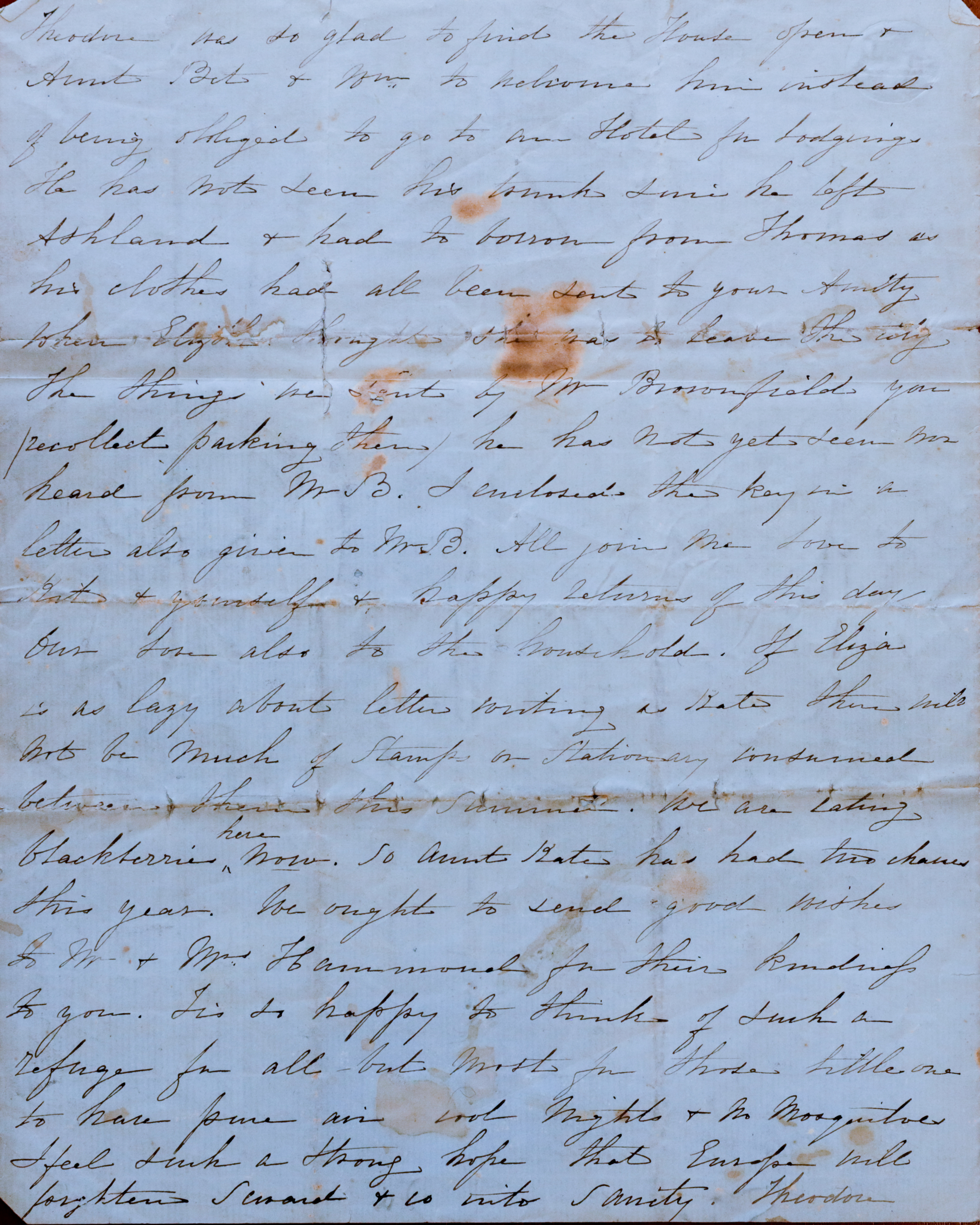
Transcription
A handwritten continuation page, faded blue/grey ink in a sloping cursive on plain paper. No salutation, date, or signature visible — interior page of a longer letter; political reference at close (“Europe will frighten Seward & co into Sanity”) places it in the Civil War era, c. 1861–62.
[Theodore?] are so glad to find the House open & Aunt Bet & Wm to welcome him instead of being obliged to go to an Hotel for lodgings. He has not seen his trunk since he left Ashland — & had to borrow from Thomas as his clothes had all been sent to your Aunty when Elizabeth thought she was to leave the city & have only the things sent by Mr Brownfield you recollect packing. Them he has not yet seen nor heard from Mrs B. I enclosed the keys in a letter also given to Mrs B. All join me in love to Kate & yourself & happy returns of the day. Our love also to thin household. If Eliza is so lazy about letter writing as Kate, there will not be much of stamps or Stationary consumed between [illegible] this summer. We are eating blackberries, here, now. So Aunt Kate has had two churns this year. We ought to send good wishes to Mr & Mrs Hammond for their kindness to you. Sis is happy to think of such a refuge for all but Most for those little ones to have gone in — cool nights & no Mosquitoes feel such a strong hope that Europe will frighten Seward & co into Sanity. Theodore
AI Notes
A handwritten continuation page in sloping cursive and faded blue/grey ink, no salutation or signature. The writer reports on Theodore’s arrival (his trunk left in Ashland, borrowing clothes from Thomas), encloses keys via Mr B., conveys birthday/anniversary wishes to Kate, comments on Eliza’s lazy correspondence, mentions blackberries and Aunt Kate’s churns, thanks Mr & Mrs Hammond for kindness, and closes with a politically charged wish that ‘Europe will frighten Seward & co into sanity’ — placing the letter in the Civil War era, c. 1861–62. Letter continues on the next page.
The closing wish that “Europe will frighten Seward & co into Sanity” refers to William H. Seward, Lincoln’s Secretary of State, and dates the page to the 1861–62 window when Confederate sympathizers still hoped Britain or France might recognize the Confederacy — a hope sharpened by the November 1861 Trent Affair, which briefly raised the prospect of British intervention before Seward defused the crisis by releasing the seized envoys.
Letter continues on next page.