Memoir continues: summers in N.C.; spring in Charleston; family routine at Brookland with Uncle Theodore and Aunt Ellen
Book 2, Page 19 ·1888–1900
Transcription
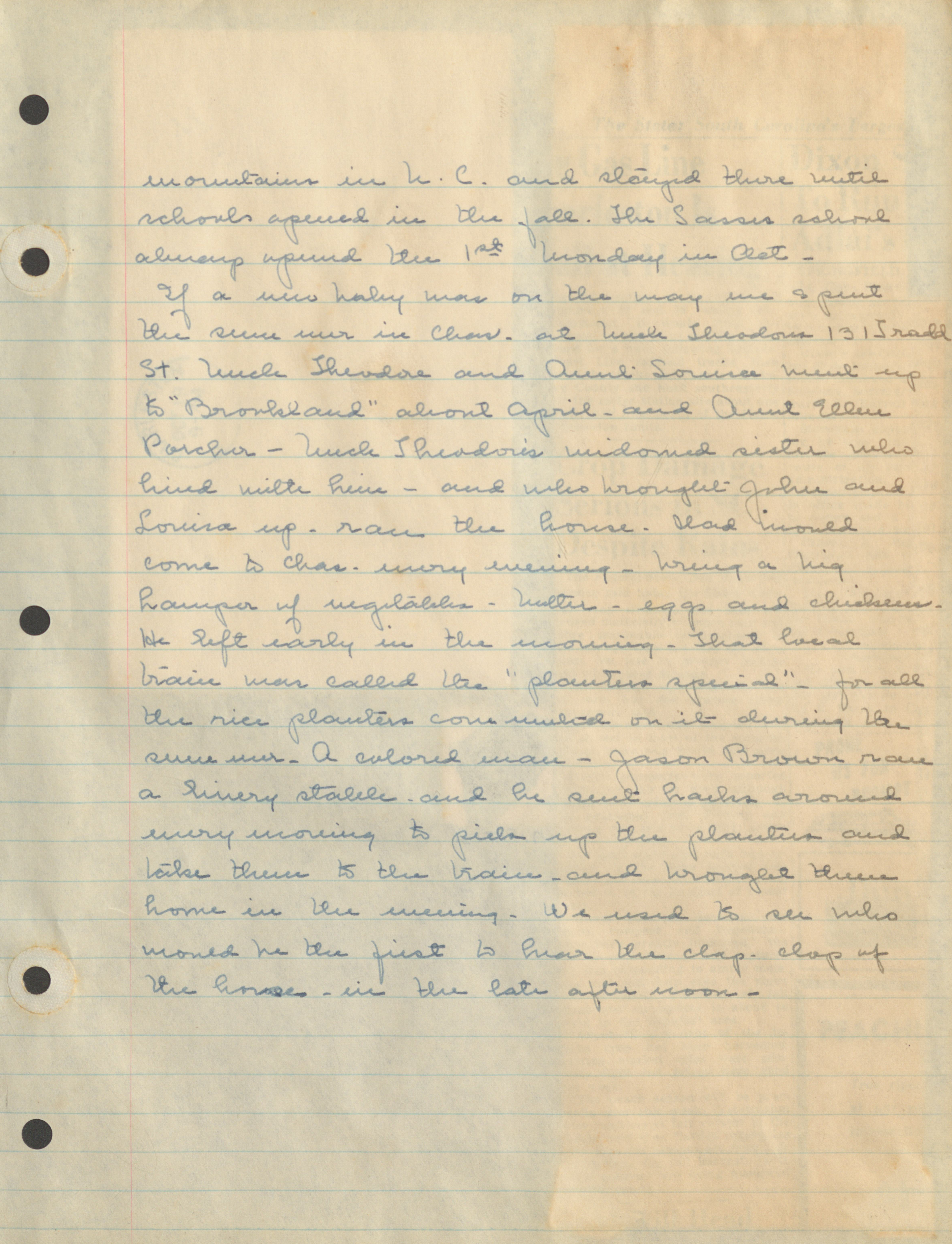
mountains in N.C. and stayed there until schools opened in the fall. The Sasses school always opened the 1st Monday in Oct.
If a new baby was on the way we spent the season in Chas. at Uncle Theodore 121 South St. Uncle Theodore and Aunt Louisa went up to “Brookland” about April. And Aunt Ellen Porcher — Uncle Theodore’s widowed sister who lived with them — and who brought John and Louisa up — ran the house. Dad would come to Chas. every morning — bring a big hamper of vegetables — butter — eggs and chickens. He left early in the morning. That local train was called the “Planters special” — for all the rice planters commuted on it during the summer. A colored man — Jason Brown — ran a livery stable and he sent horses around every morning to pick up the planters and take them to the train — and brought them home in the evening. We used to see who would be the first to hear the clop-clop of the horses — in the late afternoon —
AI Notes
Handwritten page in blue ink on ruled album paper, continuing the memoir. The family went up to the mountains in N.C. through the summer until schools opened in the fall; the Sasses school always opened the 1st Monday in Oct. (The writer spells the Misses Sass school as ‘Sasses’.) If a new baby was on the way, the writer spent the season in Charleston at Uncle Theodore’s house, 121 South St., while Uncle Theodore and Aunt Louisa went up to ‘Brookland’ about April. Aunt Ellen Porcher (Uncle Theodore’s widowed sister, who lived with them) ran the house in their absence and brought up her own children John and Louisa. Dad (Amy’s father Samuel Gaillard FitzSimons Sr., the rice planter at Mt. Hope / Adams Run) would come to Charleston every morning, bringing a hamper of vegetables — butter — eggs and chickens. The local commuter train was called the ‘Planters Special’ for all the rice planters commuted on it during the summer. A colored man — Jason Brown — ran a livery stable and he sent horses around every morning to pick up the planters and take them to the train, bringing them home in the evening.