Memoir of plantation childhood: formal supper, Dad's storytelling, and the affection of the household
Book 2, Page 11 ·1888–1910
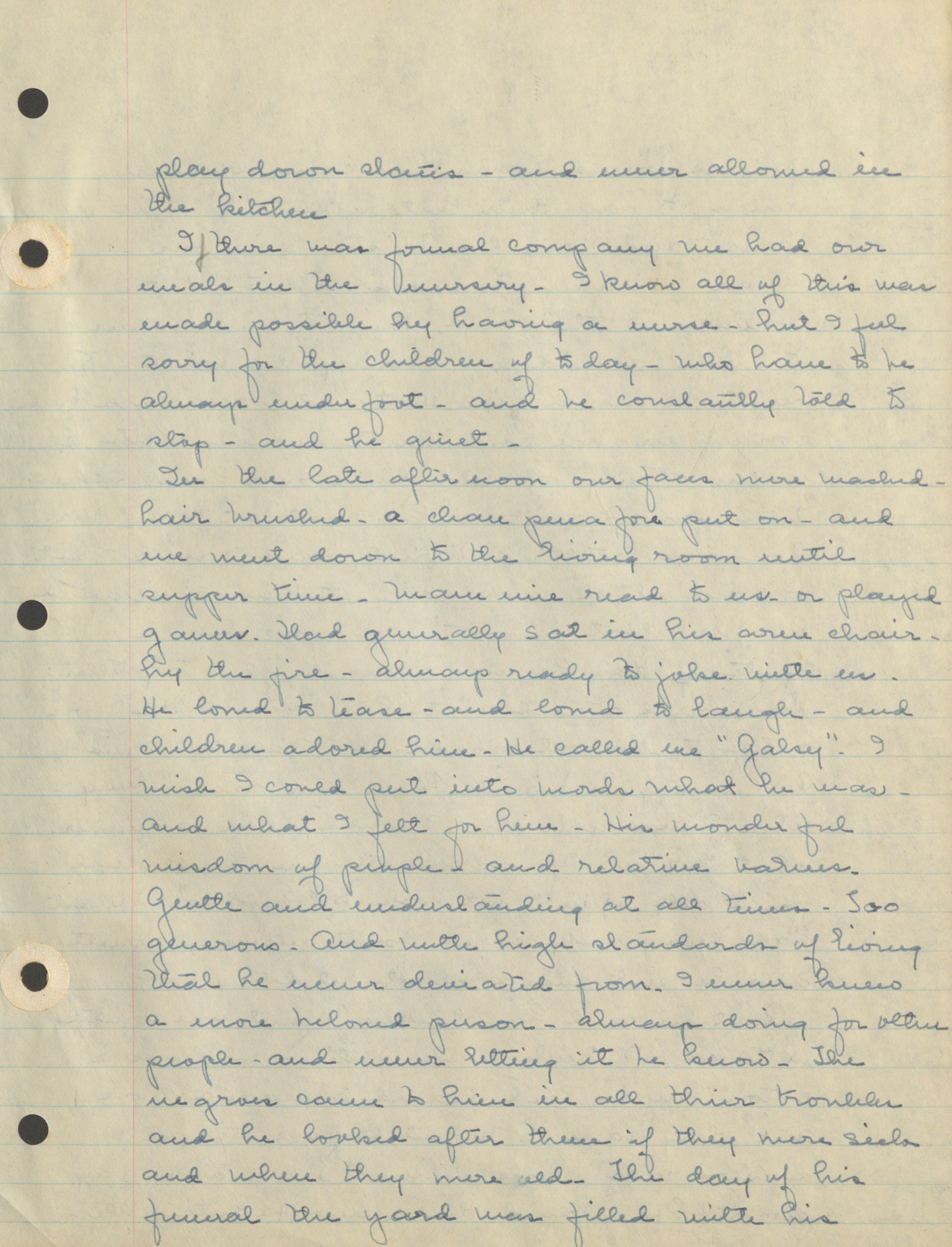
Transcription
play down stairs — and never allowed in the kitchen.
If there was formal company we had our meals in the nursery. I know all of this was made possible by having a nurse. But I felt sorry for the children of today — who have to be always under foot — and be constantly told to stop — and be quiet.
In the late afternoon our faces were washed — hair brushed. A clean pinafore put on — and we went down to the living room until supper time. Mauma Mim read to us or played games. Dad generally sat in his arm chair by the fire — always ready to joke with us. He loved to tease — and loved to laugh — and children adored him. He called me “Gabey”. I wish I could put into words what he was — and what I felt for him. His wonderful wisdom of people — and relative matters. Gentle and understanding at all times. Soo generous. And with high standards of living that he never deviated from. I never knew a more beloved person — always doing for other people — and never letting it be known. The negroes came to him in all their troubles — and he looked after them if they were sick and when they were well. The day of his funeral the yard was filled with his
AI Notes
Continuation of the memoir. Describes the formal late-afternoon descent to the living room for supper, Amy’s father Dad (Samuel Gaillard FitzSimons Sr., ‘Mister Simons’) who sat by the fire telling stories and called Amy ‘Gabey,’ and the grief of the household at his funeral when the negroes came to pay their respects. The nickname ‘Gabey’ was bestowed by Dad. The funeral described is S.G. FitzSimons Sr.'s, consistent with p012 where the colored friends come to pay last respects to ‘Mister Simons.’